Is narrative film enough to change behaviour?

One of the comments made by my tutor in the last feedback on my essay was concerned with whether a narrative film for educational purposes would need more than the film itself to achieve the desired learning outcomes.  This is a valuable question, and my essay does conclude that the purpose of narrative film could be to ‘aid and influence the acquisition of skills and behaviours’. Nonetheless, I decided to explore this a bit further in this post, as it is slightly different to the focus of my essay. The answer rests heavily on what the learning is to achieve. If the learning is only in the area perception or attitudinal change, then there are number of theorists who have already considered this. My blog post ‘Film’s ability to change attitudes’ on 21st April 2024 discusses these theorists.

To supplement this post, I considered narrative films where research has been conducted to understand their effect on a society. This is important for educational considerations because a change in attitude or perception that does not lead to commensurate changes in behaviour has limited value when the objective is to teach practical, demonstrable behaviours.  

On the very negative side, the 1915 D.W. Griffith silent film The Birth of a Nation is a three hour long racist propaganda film that gives a revisionist account of the American Civil War, the Reconstruction period and the founding of the Ku Klux Klan. It is considered to be the blockbuster movie. The film portrayed the emancipated slaves as not worthy of being free because they were uncivilized, and that their main concern was to pass laws so they could marry white women and prey on them (Lehr, 2014). An estimated 10 million Americans—roughly one-fifth of the adult White population saw the film in the first two years of its release, paying well over the normal price for a cinema ticket in those days (Ang, 2023). Ang’s research goes on to demonstrate that after the release of the film of the film in a particular area, coincided with records of an increase in racial violence, including lynchings and race riots. Six months after the film release the Klu Klux Klan (KKK) re-emerged, having been disbanded in the late nineteenth century.

Ang’s research also makes an interesting observation that the behaviour changes that were observed in the society in the short-term after the release of the film were imitations of what was in the film. A good example of this is the adoption by the newly re-emerged KKK of white robes and cross burning. Neither of these things were present in the first KKK but were featured prominently in Birth of a Nation (ibid.). This very much aligns with other research that indicates that for a film to persuade a viewer to a particular point of view, the audience must be able to identify with the protagonists and may wish to imitate them (Murphy et al., 2013).

 This film created a dilemma in film studies because it is acknowledged as explicitly racist, while at the same time recognised as being the first narrative full length feature film that made use of (at the time) revolutionary techniques to tell the story. These techniques included the use of the closeup, editing shots, and dramatic storytelling with large casts. All of which contribute to persuading a viewer to focus their attention on particular parts of the film and derive meaning from them.

On a more positive note, Jensen and Oster’s 2009 research into how the introduction of satellite and cable television in India had a significant positive impact of women’s attitudes to gender equality and education, also demonstrated that these attitudes translated into actions (behaviours) such as increases in women enrolling schools and spacing out births.

During the Covid pandemic, the Welsh ACE Support Hub launched a campaign to promote kindness to others during this period. The campaign produced one-hour narrative film that was then broadcast on national television and put on social media sites. The film shows three teenagers completing schoolwork using online video facilities. During the video call a parent reaches out to one of them because they are in a home where there is a lot of adults arguing and that is causing the teenager mental stress. The film does not tell people how to be kind, it just shows acts of kindness. In 2022, Ford et al conducted research to establish if the film resulted in increased intentions to act in ways that promote kindness to others and if people had been emotionally affected by the film. Their results indicate that on seeing the film, ‘63.6% reported intentions to be kinder to others, 65.6% intended to try and help other members of their community, and 70.5% were more likely to check in on friends, family and neighbours’ (Ford etal, 2022, p.1). Their conclusions state that they believe film is an effect media for behavioural change in public health messaging. This is a very similar to the results of work Green and Brock (2004) has done in Narrative Transportation Theory and public health messaging.

While all of the above examples point to films being able to change attitudes and therefore behaviours, these examples are in the context of societal behavioural changes. An important question for a narrative film that is to support the learning of very specific skills (e.g. for air traffic controller instructor training: problem-solving and decision-making, situational awareness, prioritisation) and behaviours (e.g. application of instructional techniques, evaluation techniques), is whether the film is enough to achieve these learning outcomes.

When I think about air traffic controller instructor training, the answer to this question is a clear no. The film would need to be supported by theoretical knowledge and opportunities to practice these skills in a simulated environment where safety is maintained during learning. The film would need to be part of the overall instructional system design for the course.

Nonetheless, the added value of the film would be in the areas of aiding understanding of an instructional concept by converting it into a practical context, motivating students through identification with the protagonist to adopt the new techniques and attitudes, demonstration of new behaviours associated with instructional techniques and experiential exposure to the circumstances that lead to certain very specific instructional and safety-related behaviours. These are advantages because traditionally these are the areas that air traffic controllers, who are notorious for being resistant to any change in an operational environment, resist if they have been instructing in a particular way for any length of time. However, if they are convinced that a new method will produce better outcomes with no compromise to safety, they are remarkable in their enthusiasm for implementing it.

The instructional design for this course has not yet started, however a number of possibilities exist. My ambition has always been to develop a full length narrative film that can be watched from beginning to end without the need to explain or support the narrative. I believe this is still possible but not necessarily the most effective way to achieve the learning outcomes.

More realistically, the script for the film, although still containing the successful four-act narrative structure identified by Cutter (2016) and still having narrative coherence, will in all probability need to be designed to contain logical chunks of learning (inside of each or some of these acts). This means that the film can be sub-divided into learning sections, where the student pauses after a section to understand the theory behind the section, possibly do some interactive exercises and, when appropriate practice in a simulator. The film could be used in an online context, or a classroom-based context. If the film is online, it would have to be followed up with real practice in a simulator.

The practical realisation of these chunks will only be evident at the instructional design stage of the process when the learning objectives are defined. As supported by my extended essay, it already clear that a narrative film is not a stand alone entity from which practical skills can be taught, but rather a support to the learning process that addresses some aspects of learning that are challenging to achieve through more traditional transmissive approaches to teaching.

References

Cutter, J. (2016) Narrative theory and the dynamics of popular movies. Psychonomic Bulletin &  Review, 23:1713–1743.

Dawkins, W. (2015) ‘The Birth of a Nation: How a Legendary Filmmaker and a Crusading Editor Reignited America’s Civil War: By Dick Lehr. New York: Public Affairs, 2014, 329 pp.’, American Journalism, 32(2), pp. 237–239. doi: 10.1080/08821127.2015.1036692.

Ford, K. et al. (2022) ‘An evaluation of a short film promoting kindness in Wales during COVID-19 restrictions #TimeToBeKind’BMC public health, 22(1), pp. 583–583. Available at: https://doi.org/10.1186/s12889-022-12876-9.

Green, M. C., Brock, T. C., & Kaufman, G. F. (2004) Understanding media enjoyment: The role of transportation into narrative worlds. Communication Theory, 14(4), 311–327

Jensen, Robert, and Emily Oster. 2009. The Power of TV: Cable Television and Women’s Status in India. Quarterly Journal of Economics 124 (3): 1057–94.

Murphy, S. T., Frank, L. B., Chatterjee, J. S., & Baezconde-Garbanati, L. (2013). Narrative versus nonnarrative: The role of identification, transportation, and emotion in reducing health disparities. Journal of Communication, 63(1), 116–137.

Film’s ability to change attitudes

Since my main essay is concerned with how film is able to influence attitudes and behaviours in a training context, I decided to consider the perspectives film theorists and psychology researchers have offered on the ability of film in general, to affect audience attitudes and behaviours.

The reference work that I use to explore past discussions is narrative transportation theory as it will form a key component of my essay. Narrative transportation theory argues that through a combination of attention, imagery and emotions, a person may become immersed in a narrative world (Green & Brock, 2000). When this happens, ‘individuals are more likely to adopt beliefs, attitudes, and behaviours that are implied by the story’ (Murphy, etal, 2013, p116).

Hugo Münsterberg

As early as 1916, Hugo Münsterberg, an American psychologist, recognised in The Photoplay: A Psychological Study that the American population ‘prefer to be taught by pictures rather than by words and that film, as the replacement of magazines, offered a unique opportunity as a medium for introducing new ideas and spreading information’ (Münsterberg, 1916, p27).

Münsterberg maintained that attention, perception, memory and emotions are the foundations for creating imagined worlds. He uses numerous examples to elaborate how filmic techniques such as closed up, cross-cuts and editing, imitate these psychological functions. In this sense he shows himself to be a formalist who does not require a film to show real life, but rather that in the viewing experience, there is ‘inner harmony and agreement’ of the narrative (p73). This resonates with Narrative Transportation Theory that lists ‘narrative coherence’ an element that must be present in a film for transportation to occur (Green in Frank and Falzone, 2021). Münsterberg argues that films create imagined worlds that liberate the viewer from the constraints of ‘real life’ and this allows the film to suggest certain associations that may not have previously been perceived (Münsterberg, 1916, p46).

He further identified that films have a strong component of ‘suggestability’ and that some behavioural effects of films may have negative effects on society. He believed that ‘any wholesome influence emanating from the photoplay must have an incomparable power for the remoulding and upbuilding of the national soul’ (p223). Although he strongly advocated for Universal Cultural Lyceum to produce and distribute educational films, he also acknowledged the attraction of entertainment films and recognised the potential for educating an ‘indifferent audience’ through messages that were absorbed while being entertained (p 224).

Vsevolod Pudovkin

In his book Film Technique, Pudovkin, a Russian Formalist, focussed on how editing and staging a film, and understanding how techniques such as contrast, parallelism and symbolism affect the perceptions and feelings of the viewer. He recognised that editing film to shift focus could be similar to how viewers manage their attention in everyday existence (Pudovkin, 1960).

Frankfurt School

Herbert Marcuse, a member of the Frankfurt School, who studies the effects of mass media on society in America, claimed that mass media, including television, transmitted and trained the ‘required societal values’ and removed the responsibility for educating away from families. Marcuse considered that the audience ‘does not really know what is going on; the overpowering machine of entertainment and entertainment unites him with the others in a state of anesthesia from which all detrimental ideas tend to be excluded’ (Marcuse, 1955, p104). Theodor Adorno, also a Frankfurt School member, considered classic Hollywood narrative films, to be so simplistic in presentation that audiences did not question what they viewed and sub-consciously absorb the ideology of the film. This has anecdotally been referred to as the hypodermic needle model (Doughty & Etherington-Wright, 2022). This approach seems to imply that the viewer has no agency, and the filmmaker exclusively determines the meaning of the film.

This understanding of the spectators’ lack of agency is likewise promoted by Jean-Louis Baudry’s apparatus theory, in which he argues that the camera acts as a form of substitute for a dominant ideology (Baudry and Williams, 1974). In this sense, the camera and the way it is used ensured that the viewer remained unconscious of the devices preventing them from reflecting on the meaning of the film in any way other than the one intended.

Stuart Hall

Stuart Hall, referring to television productions, claimed that filmic messages encoded by a broadcaster must be decoded by the viewer before the message can have any effect, and that it is during these moments of decoding that a differentiation of meaning can occur (Hall, 1973, p 3). The effect Hall refers to could be variously to entertain, persuade or instruct. He recognises that when a broadcaster encodes a message, to a degree they delimit the parameters within which decoding will occur, nonetheless, they cannot guarantee which codes a person will use to decode (p17). In this sense Hall considers the filmic message to be a construction between the intended message and the message as understood through an individual’s cultural background, economic circumstances and personal experiences.

David Bordwell

Bordwell argues that a cognitivist approach to film theory allows ‘constructivist explanations in terms of mental representations functioning in a context of social action’ (1989, p.17). From this follows the argument that perception, or watching a film, is not simply passive absorption of visual and auditory stimuli, but rather that it needs to be transformed cognitively into something that can be inferred. To elaborate this point, if in a film scene taking place in a kitchen and a woman puts a plate of eggs and bacon in front of a girl sitting at the breakfast table, the viewer will infer that the child is her daughter and that it is morning since the meal is a breakfast meal. This inference is a construct that arises from more than just the visual stimuli.

Tan in a selective meta-analysis of cognitive psychology literature aimed at understanding the filmic experience, concluded that cognitive analyses of narration in film has enabled a significant improvement in how films are comprehended (2018, p1). A key element of comprehending films, and therefore being transported into the story world, appears to be the ability of the viewer to build mental schemas of scenes across the cuts in scenes. Bordwell explains that the presentation of the ‘establishing shot’, followed by ‘detail shots’ is a classic continuity technique that enables viewers to perceive continuity (Bordwell and Thompson, 2015).

Summary

Early theorists such as Munsterberg, Pudovkin, Marcusse and Adorno recognised the power of film to influence society, however they claimed that this ability was due almost exclusively to the makers of the film and that viewers had no agency in the process. Adorno held a more extreme view that American films were so simplistic that audiences failed to question the dominant ideology of the films. Whereas more recent theorists such as Hall confirm the effect of film on viewers but also contend that the intended filmic message is not guaranteed as audiences are able to construct meaning based on their experiences. Finally, Bordwell and Thompson argue for understanding the cognitive processes involved in film comprehension and translating these into techniques that aid a viewer in forming a coherent mental schema, to enable transportation into the story world.

References

Baudry, J.L. and Williams, A. (1974) Ideological effects of the Basic Cinematographic Apparatus. Film Quarterly, Winter, 1974-1975, Vol. 28, No. 2 (Winter, 1974-1975), pp. 3947 Published by: University of California Press.

Bordwell, D. (1989) ‘A case for cognitivism’. Iris, 9, 11–40.

Bordwell, D and Thompson, K. (2015) Film Art. An Introduction. Tenth Edition. New York: McGraw-Hill Education.

Doughty, R. and Etherington-Wright, C. (2022) Understanding Film Theory. 2nd Ed. London: Bloomsbury Academic.

Frank, L and Falzone, P. (2021) Entertainment-education. Behind the Scenes. Case studies for theory and practice. Cham: Palgrave Macmillan.

Green, M. C., & Brock, T. C. (2000). The role of transportation in the persuasiveness of public narratives. Journal of Personality and Social Psychology, 79, 701–721.

Marcuse, H. (1955) Eros and Civilization. Boston: Beacon Press.

Münsterberg, H. (1970) The Photoplay: A Psychological Study (New York: D. Appleton & Co., 1916); reprint (New York: Dover Press, 1970).

Murphy, S. T., Frank, L. B., Chatterjee, J. S., & Baezconde-Garbanati, L. (2013). Narrative versus nonnarrative: The role of identification, transportation, and emotion in reducing health disparities. Journal of Communication, 63(1), 116–137.

Pudovkin, V. (1960) Film Technique. New York: Grove.

Tan, E. (2018) A psychology of the film. Palgrave Communications  4, 82. https://doi.org/10.1057/s41599-018-0111-y

Narrative transportation theory

I was very happy to discover Dr Melanie Green’s  theory of ‘transportation into a narrative world’, as this is exactly what I had been looking for to explain why, when we watch a film, we can end up learning from it even though the intention had not been to learn but rather to be entertained. Her theory takes this much further, and she argues that transportation can lead to changes in beliefs, attitudes and behaviours. For the film that I intend to make, all three aspects of change are necessary. Consequently, I have spent quite a bit of time trying to understand how ‘transportation’ occurs.

Narrative transportation happens when a person becomes fully immersed in a narrative world, experiencing a state of heightened attention, emotional engagement, and mental imagery. This state of transportation happens because of the story’s ability to create sensory and emotional experiences that allow a person to imagine themselves to be in the story. Once the person is transported, they are more likely to adopt the beliefs, attitudes, and behaviors shown or contained by the story, or adopted by the characters they relate to in the story (Green and Brock 2000; Green and Brock, 2002).

Transportation can happen across a wider variety of media, meaning that a person can be ‘transported’ through, for example, reading a book, playing a virtual reality game or watching a film. The research does not indicate that there is one medium that is more likely to produce transportation above the others, but rather that it is the content of the narrative story that is the most important influencing factor. Consequently, when choosing a medium for edutainment, practicality and expert opinion on the best medium for the intended audience can be the driving factors. Nonetheless, Walter, Murphy, Frank, and Baezconde-Garbanati (2017) concluded that video/film of a narrative led to higher levels of mental and emotional involvement than books,  but if the subject of the film strongly challenged a person’s perspective could lead to them feeling threatened.

 How does narrative transportation lead to change?

Green goes on to explain how transportation may lead to these changes, and includes mechanisms such as reducing counterarguing, viewers establishing connections with characters, increases in perceived realism, mental imagery of story events, and emotional engagement (Green in Frank and Falzone, 2021). In reviewing these mechanisms, I have applied it to film, however Green has noted that narrative transportation occurs across many different media.

Reduced Counterarguing

Green explains that one of the barriers to attitude/behaviour change is the arguments a person has constructed to resist a new perspective. Stories can appear less threatening than a message delivered as a direct educational objective and can therefore create a space where the person is more open to accepting different views. In some cases, the viewer may not even have thought about whether a film is persuasive, so doesn’t spend much time analysing the message of the film or the educational objectives. She also acknowledges that transportation may indirectly reduce the viewer’s motivation to put forward any counterargument/s.

 Nonetheless, and depending on the type of story, it may be beneficial or an indication of engagement when the viewer starts to counterargue sometimes counterarguing can be a sign of engagement.

Connections with Characters

Viewers may identify with characters in the film and it is through this type of connection that the viewer may align their attitudes with that of the character. Furthermore, the viewer may relate to the experiences of the character/s and this may influence how the viewer subsequently thinks or behaviours. Although changes in attitudes and beliefs is important in my film, ultimately, I am seeking to create some role models for ATC instructors as it is the actions and behaviours of these instructors that will determine if the learning objectives of the film are met.

One of the ways a story might trigger viewers to reconsider their actions is to ‘remind’ them in the film of experiences that they might have had in the past – to the story content to the individual. Since my film will have many instances that instructors can related to, based on their past experiences, I am hoping for high effectively in this area.

Mental imagery

Watching a film that transports the person into the story world can result in them retaining clear mental images that are linked to beliefs. For example, in my film, associating certain types of instructing behaviours with images of the negative or positive effects on others, can be a powerful basis for encouraging instructors to act in a certain manner. Another possible use mental imagery creation may be linked to watch ‘professional instructing behaviours’ look like in an operational environment.

Emotional engagement

Narrative stories make us cry, or laugh or feel pain. At the heart of storytelling is its ability to make someone feel an emotion. Current research suggests that when a story takes a person through a series of changing emotional experiences, it helps the person maintain their attention and remain in the story world longer. is exploring not only the actual emotions (Nabi and Green, 2015).

Bibliography

Green, M. C., & Brock, T. C. (2000). The role of transportation in the persuasiveness of public narratives. Journal of Personality and Social Psychology, 79, 701–721.

Green, M. C., & Brock, T. C. (2002). In the mind’s eye: Imagery and transportation into narrative worlds. In M. C. Green, J. J. Strange, & T. C. Brock (Eds.), Narrative impact: Social and cognitive foundations (pp. 315–341). Mahwah: Lawrence Erlbaum Associates.

Nabi, R. L., & Green, M. C. (2015). The role of a narrative’s emotional flow in promoting persuasive outcomes. Media Psychology, 18(2), 137–162.

Walter, N., Murphy, S. T., Frank, L. B., & Baezconde-Garbanati, L. (2017). Each medium tells a different story: the effect of message channel on narrative persuasion. Communication Research Reports, 34(2), 161–170.

True Lies: Perceptual Realism, Digital Images, and Film Theory

Introduction

In True Lies, Stephen Prince argues that with the advent of CGI, the ‘indexical’ or causal connection between what is filmed, and the real world has been broken. Today, digital imaging can make unreal things (e.g., dinosaurs, orcs) look real, and can make unreal things fit into worlds that we recognise as real. He goes on to give many examples from films like Jurassic Park, Forrest Gump and True Lies. Prince claims that the advent of CGI challenges traditional film theory assumptions about realism.

He begins by stating that realism in film theory is associated with the concept of indexicality; meaning that there is a relationship between the photographic image and the referent (or the actual thing that was photographed). This idea of indexicality is what separates realism and formalism in film theory. The use of CGI challenges some of the assumptions of realism. Charles S. Pierce argues that photographs ‘are exactly like the objects they represent … they … correspond point by point to nature’(Wollen 1976, cited in Prince, 1996, p 28). Bazin claimed that the ‘photographic image is the object itself freed from the conditions of time and space’(Bazin, 1967, cited in Prince, 1996, p 28). Stanley Cavell claimed that film was a projection of reality because it recorded what was placed in front of the lens (Cavell, 1979, cited in Prince, 1996, p 28).

Clearly these notions of realism were developed before the advent of CGI, or the more subtle ways that film and photographs can be manipulated with post-editing software. This ability to now digitally manipulate a film challenges the idea of indexically on which realism is predicated. Prince gives the example of computer-generated light and shadow, explaining that there is no need for a ‘real’ source of light to create shadows or intensity of light, but rather that it can be determined by the artist manipulating the image.

Prince (1996, p30) then asks if the ability to manipulate film has broken the link between the photograph and its referent, can films that include elements of CGI or manipulation still be contained within the ideas of realist film theory? And if it cannot, where do they fit? Film theorists such as Rudolf Arheim, Dziga Vertov, and Sergei Eisenstein use the term formalist to emphasise that one of films defining characteristics is the ability to reorganise, counter and possibly even falsify physical reality through film editing and other techniques.

Correspondence based modelling

To answer this question as to whether CGI can be contained in realist films, Prince first describes how correspondence based modelling works. He explains that there is a lot of evidence that viewers understand a film by making connections or ‘correspondences’ between what’s being displayed on the screen and their actual experience of the visual and social world they inhabit. According to Prince (1996, p 32), it is important to understand that ‘cinematic representation’ operates through the way the correspondences are structured, and the cues they produce, to connect with the viewers visual and societal experiences. Whether a viewer considers the film to be realistic, or not, is determined by how they understand these correspondences.

Prince’s key point is that instead of asking ‘whether a film is realistic or formalistic, we can ask about the kinds of linkages that connect the represented fictionalized reality of a given film to the visual and social coordinates of our own three-dimensional world’ (1996, p 32). The discussion is more about whether the viewer considers the film realistically believable in its own environment, as opposed to reflecting real world reality.  So, the question can apply to both “realist” and “fantasy” films. This means that there is no need to establish or even ask if there is indexicality as a proof of realism, since images that do not exist in the ‘real world’ (have no indexicality) can be perceptually realistic.  

Perceptual Realism

Perceptually realistic images appear this way because filmmakers build them to be so. This is achieved by structuring the display of light, colour, texture, movement, and sound in ways that match with the viewer’s understanding of these elements in normal life. Therefore, perceptual realism is not about the image’s indexicality, but rather about its structural correspondence to the viewer’s experience of the world. Correspondence-based modelling serves this purpose; to make the digital elements of a film appear as if they belong in the same environment as the live-action elements. Today, even more so than when this paper was written, there are a wide variety of techniques and technologies that enable filmmakers to connect unreal elements with real world film that are perceptually realistic. They include:

  1. Camera tracking: The motion and position of the ‘real world’ camera are tracked throughout the scene. This tracking data is then used to synchronise the CGI elements with the ‘real’ live-action footage. The aligning of the digital camera in the CGI software with the real world camera, so that the CGI elements fit realistically into the scene is called match-moving.
  2. Object tracking: This is used to track specific elements in a scene. This helps ensure that the CGI elements interact correctly with the real-world objects and each other. Object tracking makes sure that CGI elements don’t inadvertently run through solid objects in the ‘real’ world, or fail to react to elements in the real world.
  3. Lighting and shading: This is matching, or enhancing, the digital lighting and shading to matches the real-world lighting.
  4. Compositing: The final step involves compositing, where the digital and real world film elements are combined in post-production.
  5. Top of Form

Prince concluded that with the advent of digital imaging, film theorists are shifting away from the idea of indexical realism to focus on how a film’s particular message or meaning is constructed through the intentional use or design of language, narrative, visual elements, structure and arrangement, irrespective of whether this is real or unreal. He argues that it is not necessary to make a distinction between whether a film ‘indexically records the world or stylistically transfigures it. Cinema does both’ (1996, p35).

He maintains that film theory has not fully explored the importance of perceptual correspondences, but technological advances in digital imaging have made clear how important it is to understand the perceptual correspondences viewers make when watching a film.

Relation to own work

In relation to the film I intend to make, this paper has relevance. It is inconceivable that the film will not have some form of manipulation of almost all elements – lighting, colour, texture, speed and so on. It is also quite possible that some elements of 3D animation will be included (not quite CGI on the Lord of the Rings scale 😊). The key point to take way is that whichever editing choices are made, they should be in service of perceptual realism, not indexicality. However, I do need to be very careful because on the one hand, the narrative film needs to serve both an educational and entertainment purpose but on the other hand, the content cannot stray so far away from the reality of the world that I will portray (the air traffic management world) that the viewer will connect with the perceptual reality of the story but not the real world reality it takes place in.

Reference:

Prince, S. (1996) True Lies: Perceptual Realism, Digital Images, and Film Theory. Film Quarterly (1996) 49 (3): 27-37.

Replaying past events while watching films

I found an interesting article on a piece of research that was done by Queen Mary University of London and University College London to determine if the human brain reactivates mental representations of past events during new experiences to make meaning from the new experience (Fadelli, 2023). The actual research paper is a complex read and I do not have the neuroscience knowledge to follow the entire research methodology, however, I was able to follow the descriptive part of the research and conclusions and I believe that it supports the notion that film narrative can have an inadvertent, or in the case of the film I intend to make, intentional educational value.

The researchers already knew from previous research that the brain can replay events from the past, but this was usually linked to spatial navigation tasks, i.e., the ability to replay a route that has been taken previously. This particular research had been done with rodents, not humans, however it is not hard to translate this to a person being able to recall how to get to a place they have been to before by replaying the route.

The researchers already knew that the human brain chunks information into smaller pieces that can later be recalled. An example of chunks or parcels of narrative, might be how you think about the day you have just had in chunks; you drove to work, you had coffee at work, you had a meeting, you went to lunch, you worked at your computer, etc. A parcel, or chunk of information is termed an ‘event’, and switching between one event and the next, happens at ‘event boundaries’ (Hahamy, Dubossarsky and Behrens, 2023, p.1080). Event boundaries happen when the context of what is happening changes.

However, for a person to understand a narrative, to make sense of it, needs more than just chunking or parceling ‘the ongoing stream of information into events and storing them into memory. Following an ongoing narrative requires relations to be drawn between each current event and contextually relevant past events’. The researchers argue that for quite some time already it has been proposed is that ‘remote past information could be integrated with incoming sensory information’ (Hahamy, Dubossarsky and Behrens, 2023, p.1080).

The researchers designed an experiment to see if they could ‘elicit the replay of past events as observed in rodents, but during non-spatial daily experiences’ information’ (Hahamy, Dubossarsky and Behrens, 2023, p.1080). To do this, they asked the experiment participants to watch a movie or listen to audio recordings of a narrated story while recording their brain activity using a functional magnetic resonance imaging (fMRI) scanner to look for any indications in the brain that the person was replaying past events, particularly during transitions between scenes (Hahamy, Dubossarsky and Behrens, 2023). Trying to identify if this was happening between scenes, was associated with an ‘event boundary’ occurring when a film moved from one scene to the next.  Simply put the question they asked was ‘would our brains replay past information that is needed for interpreting a scene we had just perceived?”

They used movies because for them, film simulated real word experiences (apparently, they hadn’t been reading Baudrillard!) and films are made up of events that ‘should be linked together to understand the overall narrative’ (Hahamy, Dubossarsky and Behrens, 2023, p.1080). Apparently, they hadn’t read Deleuze’s Cinema 2: The Time-Image either. Nonetheless, it is understood that what they refer to as ’natural narrative’ for a film would follow a classic linear narrative structure. The film they used was Episode 1 of the BBC’s television series ‘Sherlock’.

This experiment is interesting because my film needs to serve an educational purpose, while at the same time be convincing as a story in its own right. Some of the issues that I want to address from an educational achievement perspective are concerned with mindsets and actions around subjects that may not be encountered on a daily basis, such as incidents with security/cyber-security, not making assumptions about the safety of an operation and developing habits that communicate safety concerns or suspicions. The problem with these issues is that they are not encountered on a daily basis, making them unrelatable for the target audience. When we train air traffic controllers (ATCOs) to deal with situations that don’t often (thankfully) occur in real operations, such as aircraft experiencing various different emergencies or keeping the skies safe when there is a system outage, we use very realistic simulations to expose the ATCOs to these situations and allow them to practice different responses. This training is repeated regularly in the simulator so that the ATCO can retain a mental model of how to respond.

However, the audience I am targeting for the film is a much wider Air Traffic Management (ATM) audience – effectively any personnel working in ATM operations, not just the ATCOs. It is simply not practical to provide simulation for so many different people doing so many different jobs. If people can make sense of current events, by replaying past events (in this case, a past event seen in a film) it could be a very powerful tool for creating awareness and triggering responses from ATM personnel on how to think about and respond to potentially unsafe situations.

The results of the experiment showed that while people were watching the film, they reactivated past events, in real-time, to make sense of each scene. More specifically they conclude that these reactivations are considered as the ‘candidate mechanism for binding temporally distant information into a coherent understanding of ongoing experience’(Hahamy, Dubossarsky and Behrens, 2023, p.1080). The fact that this is happening in real-time is important because it suggests, to me at least, that reactivation of a past event (even if it was in a movie) to help make sense of a current situation that potentially requires an action, can be considered as part of an educational endeavor, and even more so if the film can also provide guidance on how to deal with the new situation.

References:

Fadali,I. (2023) Study finds that the human brain reactivates mental representations of past events during new experiences. MedicalxPress. Available at: https://medicalxpress.com/news/2023-06-human-brain-reactivates-mental representations.html?utm_medium=email&utm_source=other&utm_campaign=opencourse.GdeNrll1EeSROyIACtiVvg.announcements~opencourse.GdeNrll1EeSROyIACtiVvg.1s1RHF8PRFGwztzDi5eVIQ (Accessed 8 October 2023)

Hahamy, A., Dubossarsky, H. & Behrens, T.E.J. (2023) The human brain reactivates context-specific past information at event boundaries of naturalistic experiences. Nat Neurosci 26, 1080–1089. https://doi.org/10.1038/s41593-023-01331-6

Movement-image and Time-image

Gilles Deleuze (1925-1995) was a French philosopher who covered a wide range of subjects including film theory. I have concentrated on the work that he did that I believe may have relevance to my narrative film.

His major work on cinema is divided into two categories; the Movement-Image and the Time-Image. In the movement-image, he discusses traditional narrative cinema, which relies on cause-and-effect relationships and the continuity of time and space. Whereas, the time-image, is when there is a break from this traditional narrative structure that explores non-linear and fragmented approaches to storytelling. Both of these approaches could be relevant to my film.

The Movement-Image

The concept of the movement-image is a key way in which Deleuze analyses traditional forms of narrative film. He published this concept in a book called “Cinema 1: The Movement-Image,” which was published in 1983. He argues that movement-image is a way to explain how traditional cinema (i.e. Hollywood films) constructs and communicates narratives by manipulating time, space, and cause/effect.

The main ideas associated with this concept include:

  1. Continuity and Representation: In the movement-image, cinema is primarily concerned with continuity and representation. This means that in traditional narrative cinema the aim is to create a seamless flow of images and sounds that represent a story in a cause-and-effect way. Time is linear, as is space and the narrative structure is clear with well-defined characters and plot points.
  2. Action and Reaction: Movement-image relies heavily on the principle of action and reaction. It presents events in a way that shows how actions lead to consequences and how characters respond to various stimuli. This cause-and-effect structure is old-style or classic Hollywood cinema, where the story reveals itself in a logical and predictable fashion.
  3. Cinematic Techniques: Deleuze also discusses the use of cinematic techniques such as composition of the shots, ways of editing, and camera movement. These techniques are used to create a coherent narrative that the audience can easily follow.
  4. Sensory-Motor System: Deleuze introduces the idea of the “sensory-motor system” as the way in which classic cinema engages the viewer’s senses and motor functions. Viewers are drawn into the narrative because they start to identify with characters and react emotionally to what happens on the screen.
  5. Perception of Time:  Time is typically perceived as linear and continuous with the past, present, and future tightly connected. This perception of time aligns with conventional storytelling techniques.

The Time-Image

“Cinema 2: The Time-Image” was published in 1985 and explores more complex and non-linear approaches to filmmaking and film analysis. He believes that film that does not confine itself to conventional linear storytelling (i.e. movement-image)  but rather displays a more fragmented sense of time and continuity provides new and interesting ways of telling stories. This fragmentation often involves blurring of past, present, and future, making it challenging for the viewer to work out a clear chronological order of events.

Some key points:

  1. Subjectivity and Memory: The time-image film often explores the subjective experiences of characters and the way they perceive and remember events. Memory becomes a key element in how the narrative is constructed, meaning that characters may revisit or re-experience past moments in a non-linear fashion. This focus on individual subjectivity and memory allows films to be more introspective and psychological. A good explain of this is Martin Scorsese’s film Shutter Island (2010) where the story is seen through the eyes of the main protagonist who is mentally unstable, making his memories unreliable.
  2. Sensations and Affects: These films have a strong emphasis on creating sensory impacts for the audience. Instead of prioritising action and plot, the time-image film tries to evoke sensations and emotions in the audience. These sensations can vary, from being disorienting, to contemplative, or dreamlike. A good example of this is the David Lynch film, Mulholland Drive (2001) that combines dreamlike sequences, narrative disruptions, and a nonlinear narrative to create a mysterious and unsettling atmosphere.
  3. The Crystal-Image: The “crystal-image” is a key concept for time-image. This is when, in the film, the past, present, and future come together into a single, crystalline moment. The crystal-image represents a collapse of traditional temporal boundaries and invites viewers to contemplate the coexistence of different temporal dimensions within a single frame. A good example of the crystal image in a film is Christopher Nolan’s Inception (2010). Actually, this film is a good example of many different time-image concepts. In the film there is a scene where Dom Cobb (the protagonist) revisits his memories and confronts his own guilt and regrets about his wife, Mal who died. The moment takes place inside a dream world, but at the same time and the structure shifts to show the coexistence of multiple temporal dimensions. As Dom delves deeper into his memories and emotions, the boundaries between the past and present begin to weirdly blur, and time becomes sort of fluid and subjective. The scene is a good example of the crystal-image because it brings together the  introspection of past events and emotions, with the present. In this way it gives the audience and chance to think about the complexities of memory, guilt, and the interplay between different temporal layers.
  4. Non-linearity and Discontinuity: To achieve this, directors make use techniques such as flashbacks, flash-forwards, and elliptical editing to disrupt the traditional flow of time and confuse audiences’ expectations.
  5. Art Cinema and Avant-Garde Film: The time-image is often associated with art cinema and avant-garde filmmaking, where directors experiment with narrative structures and visual styles to create more open-ended stories.

Applying this to my work

On reflection, I do not believe it necessary to choose exclusively a movement-image or a time-image approach to making my film, although at this point I believe that movement-image is the most effective concept for a film that should also have educational value. Time-image films are characterised by nuanced and rich experiences for an audience that wish to untangle to the non-linearity and discontinuity of a film and contemplate the multiple-interpretations that could be made. That may be part of the appeal of a time-image film, however, for my film, I would need to give consideration to how the audience dealing with discontinuity and non-linearity would help or hinder the learning value.

Rhetoric of the image

Roland Barthes is a French philosopher who was heavily influenced by the structuralist linguistics of Ferdinand de Saussure.  Barthes begins his essay ‘Rhetoric of the image’ by pointing out that linguists don’t attribute the status of ‘language’ to all types of communication, using as an example the ‘language of bees’ or the ‘language of gesture’ because those kinds of communications do not work the same way that language by system of difference. He argues that while it is true that bees communicate, birds communicate and gestures are a way to communicate, they are not the same as language because language (according to linguists) works by virtue of an arbitrary relationship of the difference of the different signs. He then asks if images can they be analysed in the same way that language is analysed. Barthes cites two opposing views on this question; there are those who think that the image is an extremely rudimentary system in comparison with language, with the other side saying that images have an ‘ineffable richness’ that includes some signification, or some messages that mere language just cannot do justice to. Barthes writes that if the image is, in a way, the limit of meaning then it could be used to understand how signification works, it could help to answer questions about how does meaning get into the image and where does it end. For this essay, Barthes uses the structuralist concept of the signifier (the form of the image) and the signified (the concept or idea it represents) to analyze how images function as signs.

To do this, he uses an advertising image to explain this. The reason he uses the advertising image is because ‘the signification of the image is undoubtedly intentional; the signifieds of the advertising message are formed a priori by certain attributes of the product and these signifieds have to be transmitted as clearly as possible’ (Barthes, 1962,p 152). Meaning that when a business that sells the ingredients of pasta dinner creates an advert for its products, it intends for you to think positively about pasta dinners and to associate that particular brand with good pasta dinners.

He notes four different signs that can be found in the image:

  • the first is the idea of someone returning from the market, giving the feeling of freshness produce and domestic preparation. This is achieved by depicting a net bag one with canned goods, plastic wrapped pasta along with fresh items (tomatoes, peppers, mushrooms, onions) tipping out of the bag as if it has been place on a kitchen table when arriving home.
  • the second sign is the one produced by the colours of the tomato, pepper and the colours green, yellow and red reminding the viewer of the Italian flag. Yet again to remind the viewer of the image’s Italianicity. This is supported by the Italian sounding brand name ‘Panzani’.
  • the third sign is the sense of a completely natural cooking experience. By combining natural products with the Panzani packaged products, it introduces the idea that Panzani products are as ‘natural’ as the tomatoes, peppers and onions.
  • the fourth sign comes from the way the image is composed. It reminds the viewer of the countless still life painting of idyllic kitchen and food scenes

Barthes also points out that several of the signified objects in the image are iconic, so unlike the arbitrary connection between the signifier ‘dog’ and the four-legged canine, the relationship between a photo of a tomato and a real tomato is not arbitrary but analogical, so there is no need to make any connection. This is where Barthes believes the relationship between language, or a ‘true sign system’ and the image breaks down because unlike language which is a system of signs with a code, images present a message without a code. Consequently, in order to read this level of the image all that is needed is the knowledge of the objects. However, he also recalls that what the eye sees can be interpreted in many different ways depending on who the viewer is.  

He concludes that the image presents us with three different messages; the linguistic message which we resolve according to the code by which we understand language, and two iconic codes, the first one (the denoted image) in which a picture of a tomato represents a tomato, and a second one which is the iconic cultural message (the symbolic message) that allows us to understand that the bag, its contents and its colours are to be understood as having Italianicity.

The linguistic message

Barthes points out that the first message the image displays is linguistic, referring to the caption of the image and the labels on the food products. The picture does not appear to have the caption but it would seem that that the caption that goes with the image is in French and basically says it’s pasta and sauces. It is Italian food products being advertised in French magazines. The linguistic message is twofold; it denotates food products and connotates a sense of ‘Italianicity’.

Barthes explains that the linguistic message can serve as an anchor for the image. Anchorage can guide or limit the interpretation of the image. It serves to direct the viewer’s attention, explain the intended message, or provide specific information about the image. This anchorage can also have the effect of reducing the range of interpretations a viewer may have of an image. It can do this by stating certain facts or ideas.

In addition to limiting interpretation, the linguistic message can also be used to expand on what is in the image, for example through context or background information.

Barthes points out that an image is not a standalone entity but is part of the bigger semiotic system. Consequently, the linguistic message also interacts with the image’s denotation (literal meaning) and connotation (symbolic associations) to construct the overall meaning of the image.

The denoted image

The denoted image refers to what is immediately visible. It is the most basic and straightforward interpretation and usually refers to objects, people, places, or scenes. When describing the denoted image the viewer would typically identifying objects, their shapes, sizes, colours, spatial relationships, without trying to interpret any addition meaning.

A denoted image can be understood by anyone from any background; for example, a photograph of an apple would denote the image of an actual apple, and this understanding would be mostly consistent across cultures.

For Barthes, the denoted image is the foundational layer of meaning in the semiotic system. Additional layers such as connotation are built on top of the denoted image. While the denoted image deals with the objective, concrete elements, connotation is concerned with how the image is interpreted by the viewer and therefore is influenced by culture.

The symbolic message

The “symbolic message” refers to the meaning of an image that goes beyond what is denotated and connotated. The symbolic message involves the understanding of the symbols in image that convey deeper meanings. Like the denoted and connoted parts of an image, the symbolic message is the key part of semiotic analysis because it is concerned with how signs and symbols convey meaning.

These meanings are not always obvious and often need a deeper level of interpretation because they represent things like values and beliefs. This is why symbols in images have cultural significance and are understood only within that specific cultural context. Different cultures may interpret the same symbol differently, and at the same time viewers will also add their won subjective interpretation based on their background.

The symbolic message adds complexity to an image’s interpretation. One image can contain multiple symbols, each with its own set of connotations and meanings. These symbols may interact with each other to create a layered and nuanced message.

Barthes “Rhetoric of the Image” explores the complexity of visual communication and the ways in which images convey meaning through various layers of interpretation and the interplay of signs and symbols.

Reference:

Barthes, R. (1964). Rhetoric of the Image. In Image – Music – Text, Stephen Heath. 1977. 32-51, Hill and Wang.

Postmodernism in narrative film

I’ve been struggling to relate my intended work with the film theorists, practitioners and examples provided in Part 1 of the module. I think this primarily because the focus has been on photography and film artists. My interest is sitting more in the narrative film area and so I decided to relook at Postmodernism from the perspective of mainstream film. Doughty and Etherington (2022) provide an excellent breakdown of the traits that are associated with Postmodernism.

Jean-Francois Lyotard

These include the rejection of grand narratives, i.e., the big stories that influence what a society values and consequently finds acceptable, and the promotion of micronarratives that focus on smaller, more personal stories. Examples of films that deal with metanarratives include:

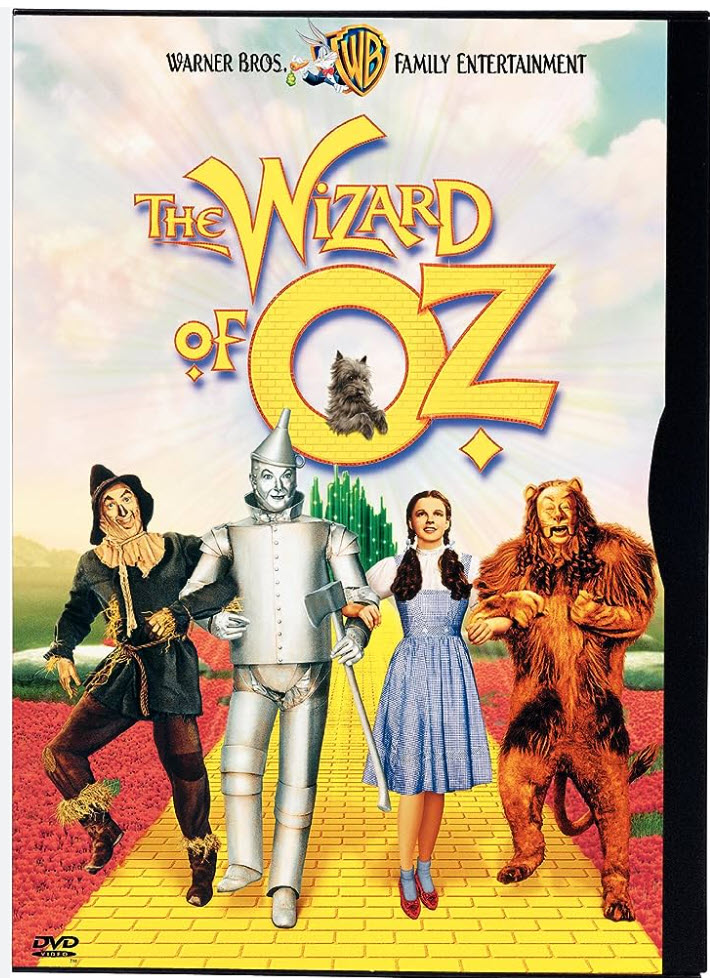
“The Wizard of Oz” (1939) – the story of Dorothy’s journey to the land of Oz, the characters she encounters and then finding her way home. This film may be interpreted as a metanarrative about the search for meaning and self-discovery, with each character she meets representing different aspects of human nature.

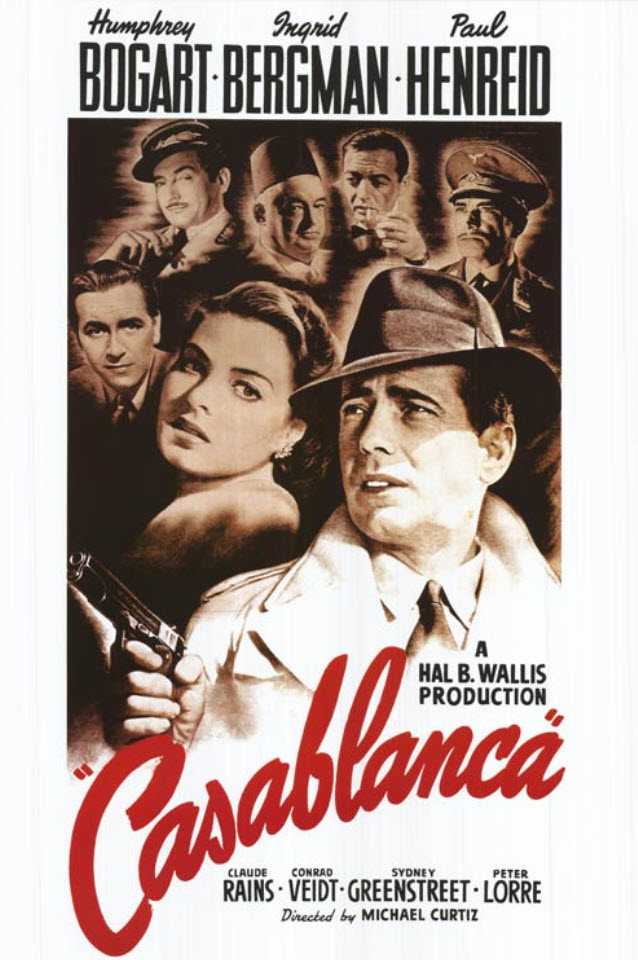
“Casablanca” (1942) – this film, set during World War II, could be seen as a metanarrative about the complexities of human relationships and the struggle between personal desires and moral obligations.

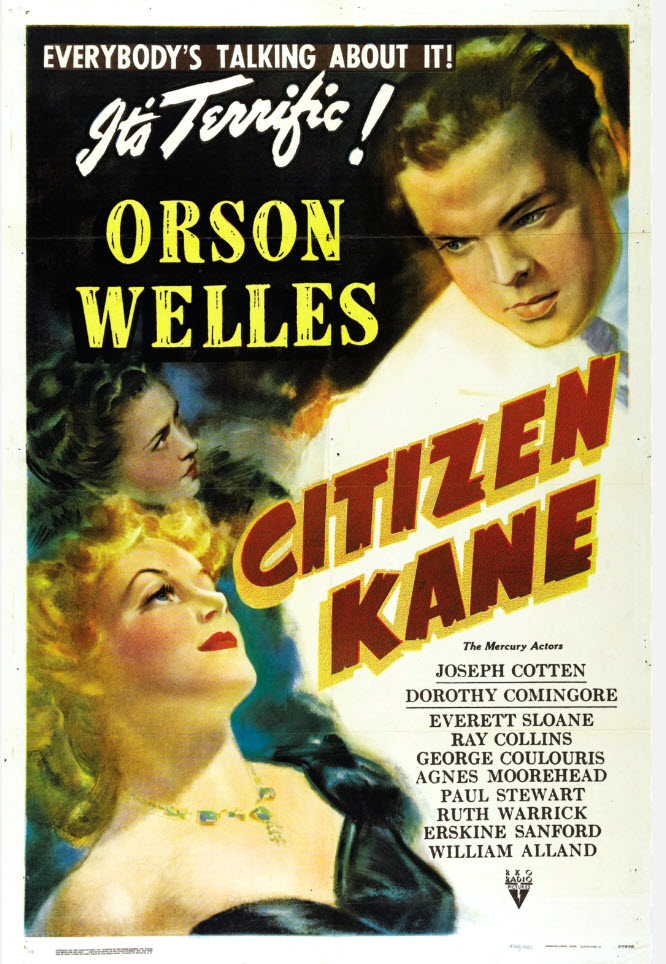
“Citizen Kane” (1941) – this film tells the story of the life of Charles Foster Kane. It may be seen as a metanarrative about the pursuit of power, wealth, and the emptiness that comes with it.

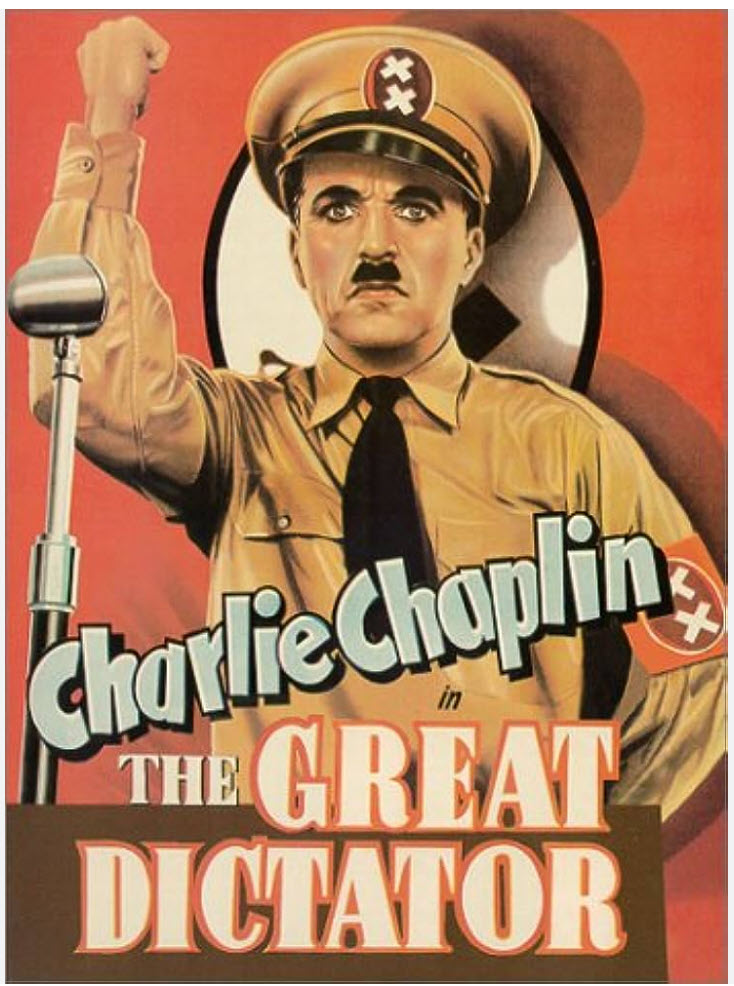
“The Great Dictator” (1940) – this is a Charlie Chaplin film set in World War II that may be seen as a metanarrative about the dangers of totalitarianism and the importance of democracy and human rights.

Jean-Francois Lyotard (1979) argued that society began to lose faith in the big narratives and epic tales because of their all-encompassing nature. Storytellers, including filmmakers, began to focus on smaller issues that affected smaller communities or individuals. Often these films can come across as more fragmented because of their non-linear structure and selective perspective. They may also come across as mundane as they focus on the small moments in life, instead of the epic events. Examples of postmodern micronarrative films include:

“Pulp Fiction” (1994) – this film contains multiple intersecting storylines and interconnected micronarratives.

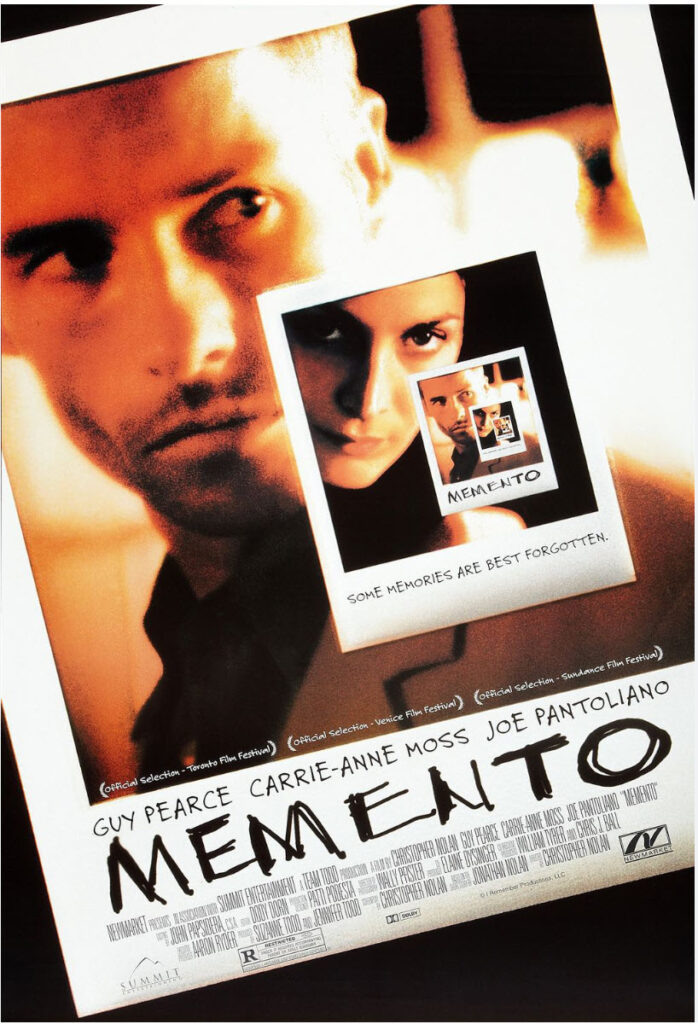
“Memento” (2000) – this film tells the story of a man with short-term memory loss who is trying to solve the mystery of who murdered his wife. The narrative happens in reverse order, forcing the audience to piece together the micronarratives at the same time as the main character.

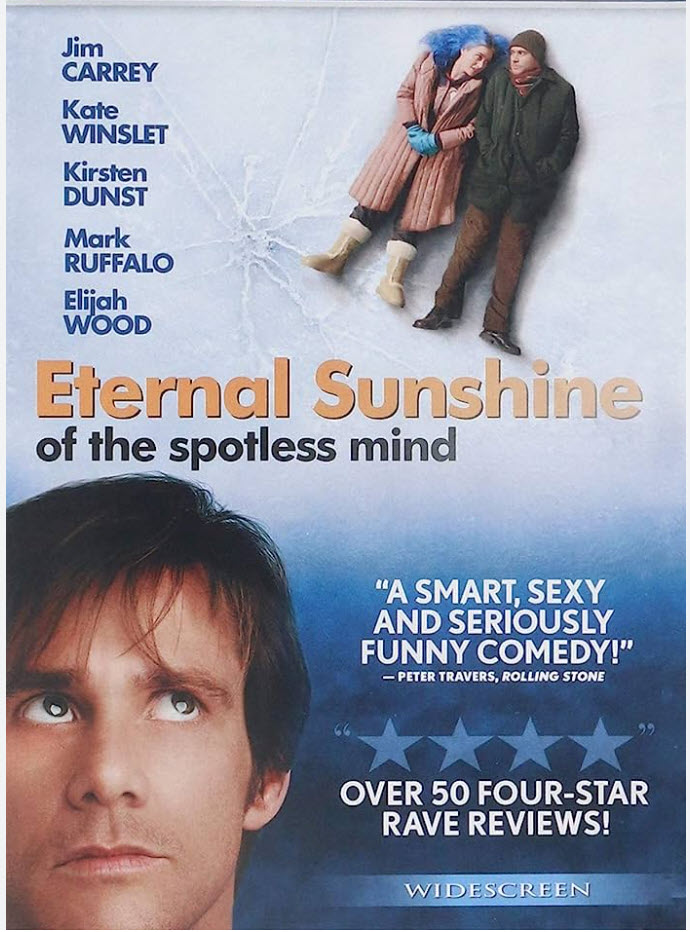
“Eternal Sunshine of the Spotless Mind” (2004) – this film depicts the fractured memories of a failed relationship. It portrays what’s happening in the protagonist’s mind as he undergoes a procedure to remove his memories. This weirdly presents micronarratives happening the character’s subconscious.

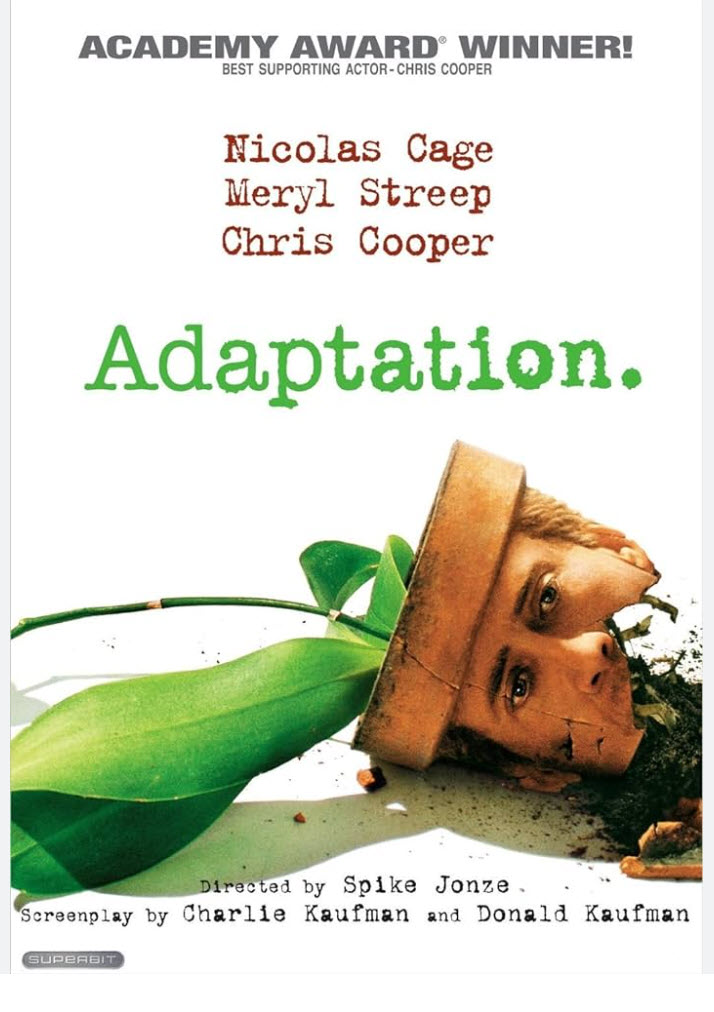
“Adaptation” (2002) – this film blurs the lines between reality and fiction. It follows a screenwriter’s struggle to adapt a nonfiction book into a screenplay, and at the same time is exploring the micronarratives of the writer’s life and creative process.

Relating this to my own film

Trying to relate the notions of meta- vs micronarratives to the film I intend to make, I have been trying to work out if the film has any metanarratives. Certainly, it will deal with issues such as security and safety, rule of law and cooperation between States, however these themes are not epic in the sense that Lyotard describes them but rather serve as the contextual backdrop. I would be inclined towards saying that my film will have micronarratives, each with learning objectives embedded in those micronarratives. I do believe that micronarratives enable, or even require, that the story be fragmented/incomplete which fits with what I need to achieve with regard to multiple learning objectives and a limited amount of time (the length of the film) to achieve those objectives. Nonetheless, considering that all the examples of postmodern films that I have given have non-linear timelines, I would need to consider if a non-linear timeline would work for my film or if the ambiguity that it may create would be counterproductive. This really does get me thinking about whether I will need to resolve the tension between achieving learning objectives and the structural integrity or novelty of the film.

Jean Baudrillard

A second idea that emerged from Postmodernism was forwarded by Jean Baudrillard (1981) who argued that in modern society, some ‘simulations’ have lost their link with the original reality. The example he gives is of Disneyland which is supposed to represent the small town America, except that what Disney has created, never existed. It is instead a romantised and fictionalised version of a town that now exists in its own right and on its own trajectory. Baudrillard’s calls this simulacra (copies without originals) and says that as a society we are now living in a situation where these simulacra are becoming more real and significant to the society than reality itself.  He defined three orders of simulacra:

  1. First Order Simulacra: Faithful representations of reality, where the copy reflects an existing original.
  2. Second Order Simulacra: The copy starts to distort or deviate from the original, but there is still some connection or reference point.
  3. Third Order Simulacra: At this level, there is no connection to any original. It’s a complete simulation without any reference to reality. It is hyperreal and self-referential.

Baudrillard says that society has moved beyond the first two orders of simulacra and are increasingly immersed in the third order. The proliferation of media, advertising, and digital technologies has created a hyperreal environment where simulations are more compelling, persuasive, and influential than the reality they claim represent. This raises questions about the nature of reality and the role of representation in contemporary culture.

I tried to find examples of postmodernist films that represent the second and third order of simulacra. It turned out to be quite a subjective exercise. Both Blade Runner films – “Blade Runner” (1982) and “Blade Runner 2049” (2017) – could be either second or third order simulacra. If considered as second order, then I would argue that the world that is represented is meant to be a dystopian Los Angeles of the future, therefore the audience can relate to a known city and how it might be in some distant future. However, I think it is more likely a third order film as there is no certainly that the skyscrapers (unidentifiable, so far as I can tell), constant rain, technology and wide gap between the elites and the poor people are a certain future reality.

Relating this to my own film

There is an interesting dilemma for me and my film. I believe that the story environment of my film has to reflect the reality of the air traffic management environment to be credible as a learning tool. Nonetheless, for security and a whole load of other reasons, I cannot replicate a real air traffic control centre, so I will have to create a simulation of a real environment. I think the biggest concern is that I stray into third order simulacra and disconnect too much from reality. The temptation is likely to be that deviating from reality is a quick solution to either a logistical, technical or narrative dilemma. I will need to strike a balance between simulation and reality.

References:

Baudrillard, J. (1981). “The Precession of Simulacra.” In Simulations, pp. 1-42. Semiotext(e).

Chaplin, C. (Director). (1940). The Great Dictator [Film]. United Artists.

Curtiz, M. (Director). (1942). Casablanca [Film]. Warner Bros.

Doughty, R., & Etherington-Wright, C. (2022). Understanding Film Theory (2nd ed.). Bloomsbury.

Fleming, V. (Director). (1939). The Wizard of Oz [Film]. Metro-Goldwyn-Mayer.

Gondry, M. (Director), & Kaufman, C. (Writer). (2004). Eternal Sunshine of the Spotless Mind [Film]. Focus Features.

Jonze, S. (Director). (2002). Adaptation [Film]. Columbia Pictures.

Lyotard, J.-F. (1979). The Postmodern Condition: A Report on Knowledge. University of Minnesota Press.

Nolan, C. (Director). (2000). Memento [Film]. Summit Entertainment.

Scott, R. (Director). (1982). Blade Runner [Film]. Warner Bros.

Tarantino, Q. (Director). (1994). Pulp Fiction [Film]. Miramax Films.

Villeneuve, D. (Director). (2017). Blade Runner 2049 [Film]. Warner Bros.

Welles, O. (Director). (1941). Citizen Kane [Film]. RKO Pictures.

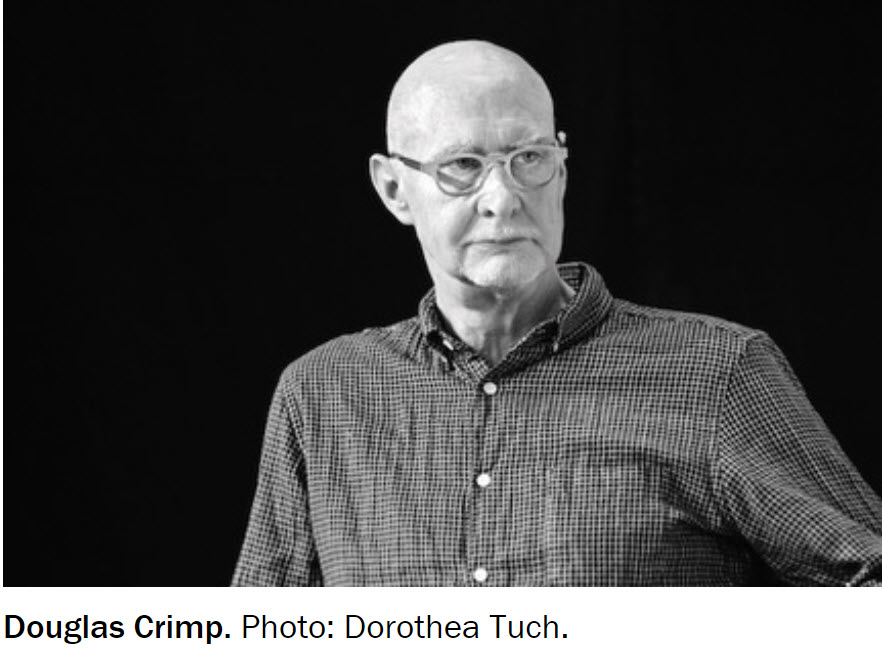
The Photographic Activity of Postmodernism (1980) – Douglas Crimp

In this essay Crimp analyses the relationship between photography and the institutions that typical decide whether something should be considered ‘art’ or not.

He argues that these institutions (e.g. museums and the writers of art history) only consider something to be a work of art when it is ‘absolutely unique and original’ (Crimp, 1980:94). These museums are not interested in reproductions. Instead, they believe that the ‘presence of the artists’ must somehow be detectable in the work as that is how it can be considered authentic.

Walter Benjamin uses the example of the painting of the Mona Lisa to make the argument that mechanical reproduction depreciates the authenticity of a work of art, and it ends up losing its ‘aura’. Benjamin explains that the aura is explicitly linked with the presence of the original work of art and with the ‘uniqueness of the place in which it happens to be’ (Crimp, 1980:94).  Photography is seen as the mechanism by which reproduction occurs.

Crimp counters that the post-modernist era is not about uniqueness and authenticity, but rather about the sharing and democratizing of art. With regard to Benjamin’s view on the loss of the Mona Lisa’s ‘aura’, Crimp puts forward that if we live in an age of reproduction, it is inevitable that this notion of ‘aura’ will be lost, and it is futile to pretend that it is possible for art to maintain its status as original and unique.

Crimp (1980:109-112) identifies three kinds of presence. The first is the presence that comes from an observer seeing the art such as performance art where the observer is necessary for the art to exist, the presence that comes from representation of the object that is now absent, and the presence of someone/something that goes beyond their physical presence (albeit at times using reproductive technology which add a further complexity of the second and third kind of presence actually being absent). Crimp claims that it is this third kind of presence that is associated with photography and postmodernism.

It is a bizarre relationship in that a photograph may copy a ‘work of art’ and what you are left with is the presence of a photograph, which is a copy of a thing that is now absent because that moment in time when the photograph is taken is now in the past.

Returning to the notion of art having an ‘aura’, and photography somehow diminishing this aura, Benjamin did acknowledge that the people in some photographs had an aura, but only those that were taken before 1850 and the onset of the commercialisation of photography. He ascribed this aura not to the presence of the photographer, who he saw as a technician, but rather the long exposure times and the fact that most people being photographed at that time would have been from the upper classes and that there was a ‘spark of chance’ that the photograph would capture some uncontrolled intrusion of the reality of the person. This was the opposite of how he saw the aura of painting, which he believed was created by the skills and techniques of the painter (Crimp, 1980:95).

Crimp discusses the works of postmodernist photographers how they questioned the museums assertions about authenticity, originality and aura. They claimed that their works displaced the aura. ‘These images are purloined, confiscated, appropriated, stolen.  In their work the original cannot be located, is always differed’ (Crimp, 1993:98).

The essay gives a number of examples of this postmodernist approach to photography that explores the idea of displacing the aura. Sherrie Levine rephotographed photos that were originally taken by Edward Weston of his son. She took the photos from a poster of the published by the Witkin Gallery. One of the points she was trying to make with this exercise is that the absence of the original is what allows representation to take place and she had taken it to an extreme (Crimps, 1980:98). Personally, I find it hard to appreciate this work. Possibly the context does add some value, but at face value, it photographs of photographs without any creative input.

Overall, the essay was interesting because it elaborated a key difference between modernist and postmodernist approaches to art, and the influence that photography had on discussion of authenticity versus reproduction and the value that is placed on both.

I am struggling to relate this essay to my practice which is rooted in narrative film. The essay did make me think about what criteria my film would be measured against to determine if it had value; would it be based on its educational effectiveness, or its ability to entertain and tell and story.

Reference:

Crimp, D. (1980) ‘The Photographic Activity of Postmodernism’ In: October 15 pp.91–101.